← Speaker Archive
Adam Frank
University of Rochester astrophysicist and author
University of Rochester astrophysicist and author
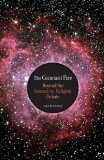
Drawing from his experience as a practicing astrophysicist and from the writings of great scholars of religion, philosophy, and mythology, Frank locates the connective tissue linking science and spiritual endeavor as human activities — their commonality as sacred pursuits — and finds their shared aspiration in pursuit of “the True and the Real.” Taking us from the burning of Giordano Bruno in 1600 to Einstein and on to today's pressing issues of global warming and resource depletion, The Constant Fire shows us how to move beyond this stale debate into a more profound experience of the world as sacred — a world that embraces science without renouncing human spirituality. From a Neolithic archaeological site in Ireland to modern theories of star formation, Adam Frank traverses a wide terrain, broadening our sights and allowing us to imagine an alternative perspective.
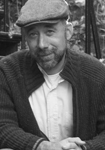
Adam Frank fell in love with astronomy at age 5. Now a Professor of Astrophysics at the University of Rochester, he has become a leading expert on the final stages of evolution for stars like the sun, using supercomputers to study star birth and high-energy fusion experiments of astrophysical plasmas. He holds a joint appointment at the Laboratory for Laser Energetics (a Dept. of Energy Fusion lab). As a post-doc he was awarded the Hubble Fellowship and in 1997 an NSF Career award. Describing himself as an 'evangelist of science,' for the last 16 years Frank has published numerous popular articles for Discover Magazine, Astronomy Magazine (editorial advisory board), Scientific American, Sky & Telescope, Tricycle and others, on everything from planet formation to the quantum mechanics of honey bee dances (a piece that inspired a major art installation). In 1999 he was awarded an American Astronomical Society prize for science writing. His first book, The Constant Fire, was published by University of California Press in January 2009 and was chosen one of SEED magazine's 'Best Picks of the Year' 2009; his work also appeared in The Best American Science and Nature Writing 2009 and Best Buddhist Writing 2009.