← Speaker Archive

Edward Burtynsky
Canadian photographer of landscapes transformed by industry
Canadian photographer of landscapes transformed by industry
Ed Burtynsky writes: “In 1997, while driving around Northern Ontario photographing mine tailings, I had what I call my 'Oil Epiphany.' It occurred to me that everything I was seeing and doing was predicated on the use of oil... At that moment I decided to investigate the landscape of oil. I found the beginning of the American oil boom at the beginning of the 20th century and did a series around Bakersfield, California. I then photographed oil fields in western Canada and Baku, Azerbaijan, refineries in Texas, Ontario and Nova Scotia, and became intrigued by automobile logistics yards, beauty pageants for transport trucks, motorcycle rallies, freeway cloverleaf interchanges. In the fall of 2009, after 10 years of creating this body of photographs, I will be producing a book on the subject, with a corresponding exhibition for the Corcoran Gallery in Washington.”
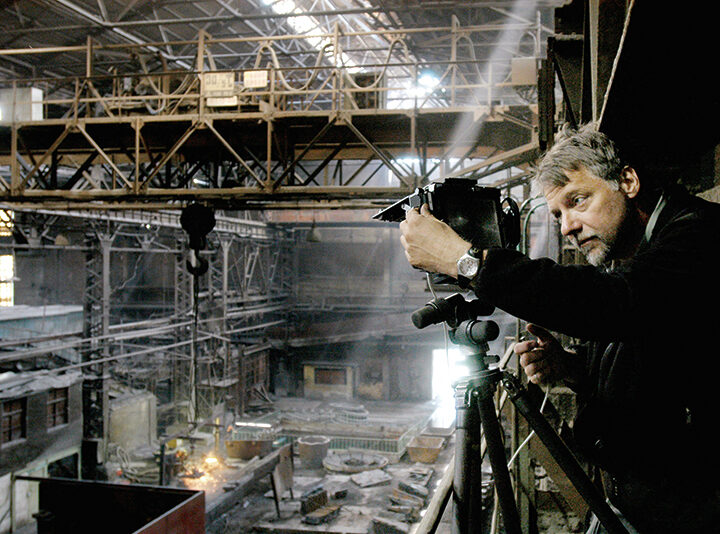
Edward Burtynsky is a Canadian photographer whose large-scale industrial landscapes depict stunningly beautiful subjects that result from environmentally unsound practices, which he calls “metaphors to the dilemma of our modern existence; they search for a dialogue between attraction and repulsion.” Burtynsky studied at Ryerson Polytechnic Institute and Niagara College. His work has taken him around the world, including to China, where he photographed construction of the Three Gorges Dam Project, which required relocation of 1.13 million Chinese in order to flood 600 kilometers of land and increase the hydroelectric yield for industrial and commercial needs. His book Manufactured Landscapes was the basis for an award-winning 2006 documentary shown at the 2007 Sundance Film Festival. Burtynsky was awarded the Canadian Environmental Award's Ideas for Life Award, given for outstanding efforts that increase environmental awareness or the conservation, restoration or sustainability of Canada's environment through excellence in the arts, entertainment or design. In 2005, he was awarded a TED prize that came with three wishes, one of which was: “I wish my artwork could persuade millions of people to join a global conversation about sustainability.”