← Speaker Archive
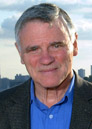
Leroy Hood
Pioneer in molecular biotechnology & genomics; founder, Institute for Systems Biology
Pioneer in molecular biotechnology & genomics; founder, Institute for Systems Biology
The challenge for biology in the 21st century is the need to deal with its incredible complexity. One powerful way to think of biology is to view it as an informational science, captured, mined, integrated and executed by biological networks. The challenge is deciphering the operation of dynamic biological networks across evolution, development and physiological responses. Systems approaches to biology focus on delineating these dynamic networks. I will outline the contemporary state of systems biology and its application to disease — systems medicine, together with pioneering DNA sequencing, blood protein measurement (nanotechnology), and powerful new computational/mathematical tools, will transform medicine over the next 5-20 years from reactive to predictive, personalized, preventive and participatory, leading to the digitalization of medicine.
Dr. Leroy Hood is a physician with an M.D. from Johns Hopkins School of Medicine and a molecular immunologist with a Ph.D. from Caltech. Through his work on molecular immunology, biotechnology and genomics, he pioneered the automated DNA sequencer and DNA synthesizer, as well as the protein sequencer and protein synthesizer, revolutionizing genomics and enabling scientists to sequence DNA rapidly and inexpensively, making impactful contributions to the sequencing of the human and all other genomes. He moved to the University of Washington in 1992 to found and chair the Department of Molecular Biotechnology and, in 2000, the Institute for Systems Biology. His awards include the 1987 Lasker Award, the 2002 Kyoto Prize in Advanced Technologies, the 2003 Association for Molecular Pathology Award for Excellence in Molecular Diagnostics, the 2003 Lemelson-MIT Prize, the 2004 Biotechnology Heritage Award, and the 2006 Heinz Award in Technology, the Economy and Employment. In 2007 he was elected to the Inventors Hall of Fame. He has published more than 600 peer-reviewed papers, coauthored textbooks in biochemistry, molecular biology, genetics and systems biology, and wrote a popular book, The Code of Codes. He is one of only 7 individuals, out of 6,000, who are members of the National Academy of Sciences, the National Academy of Engineering and the Institute of Medicine, and has founded more than 14 biotechnology companies. His current work forges new ground in systems medicine and in applying the systems approach to human disease.